The Las Vegas housing market is entering a new phase — one defined less by frenzy and more by strategic balance. After several years of constrained inventory and rapid appreciation, the latest

Dated: February 13 2026
Views: 222
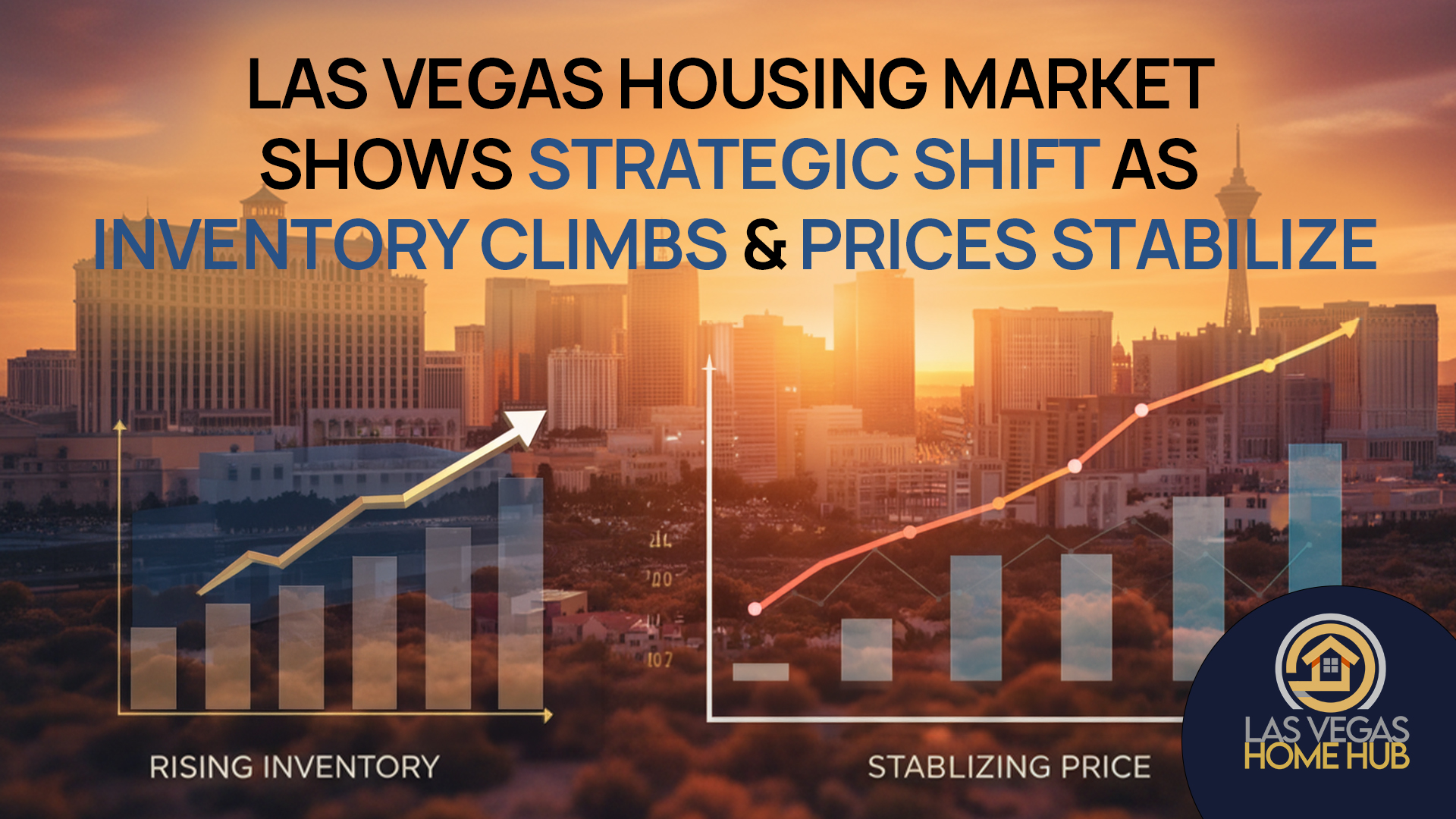
The Las Vegas housing market is entering a new phase — one defined less by frenzy and more by strategic balance. After several years of constrained inventory and rapid appreciation, the latest housing data suggests Southern Nevada is transitioning into a healthier, more sustainable environment for buyers and sellers alike.
While headlines often focus on price movements, the deeper story is unfolding in supply levels, buyer behavior, and absorption rates. Together, these indicators signal a market recalibrating rather than retreating.
Perhaps the most important development is the steady rise in available homes.
Single-family availability excluding offers climbed to 6,190 homes — up 18.7% year over year — pushing effective inventory to 4.3 months, a nearly 30% annual increase.
This matters because months of inventory is one of the clearest indicators of negotiating power. Markets under three months favor sellers; markets above five months begin tilting toward buyers. Las Vegas is now moving toward the middle — historically the hallmark of a stable housing ecosystem.
The condo and townhouse segment is shifting even faster. Inventory rose more than 25% year over year with 6.3 months of supply, firmly positioning that sector in buyer-friendly territory.
Key Insight:
This is not oversupply — it is normalization. The market is rebuilding the breathing room that virtually disappeared during the pandemic-era surge.
Sales activity softened to start the year, but pricing tells a more nuanced story.
The median single-family home price sits at $470,000, down just 3.1% from a year ago. Meanwhile, the average price surged to $620,157 — up over 24% annually.
The divergence between median and average prices strongly suggests continued activity at the upper end of the market. Luxury and move-up buyers appear less sensitive to rate pressure — a pattern increasingly common in migration-driven Sun Belt metros.
Condos mirror the trend. The median price is $283,750, down slightly year over year, while the average price jumped more than 24% to $377,389.
Interpretation:
Prices are not collapsing — they are compressing slightly while higher-value transactions pull averages upward. That is a fundamentally different dynamic from a distressed market.
January saw a significant influx of sellers entering the market.
More than 3,100 new single-family homes were listed — a 66.7% increase from the prior month — while condo and townhome listings climbed nearly 73%.
Yet homes are still moving.
Over 41% of single-family homes sold within 30 days, reinforcing that properly priced homes continue to attract buyers quickly. However, that share is declining compared to prior years — a sign buyers are becoming more deliberate.
Translation for consumers:
The era of instant offers is fading. The era of pricing strategy has returned.
Closings totaled 1,445 single-family homes, down 8.4% year over year, while condo and townhome sales fell 8%.
At first glance, fewer sales may raise concern. But historically, volume often slows before prices adjust — and today’s modest price movement suggests underlying demand remains intact.
Many buyers appear to be waiting rather than exiting.
This is a classic “pause market,” not a contraction.
The data points toward a structural shift underway across Southern Nevada housing.
What defined the last cycle:
Severe inventory shortages
Rapid bidding wars
Accelerated appreciation
What is defining this cycle:
Expanding supply
Negotiation returning
More disciplined pricing
Longer decision timelines
From a macro perspective, this is exactly what economists want to see after an overheated period.
Housing markets rarely move directly from boom to bust. More often, they rebalance.
Las Vegas appears firmly in that rebalancing stage.
Three signals will likely shape the trajectory of 2026:
If supply continues rising toward five months in single-family housing, buyers could gain measurable leverage by late year.
Even small rate improvements could unlock pent-up demand currently sitting on the sidelines.
Las Vegas remains a top destination for affordability relative to coastal metros — a long-term price support mechanism many analysts underestimate.
The January numbers do not point to a weakening market.
They point to a maturing one.
Las Vegas is shifting away from volatility and toward sustainability — a transition that historically creates opportunity for informed buyers and disciplined sellers.
For consumers waiting for a crash, the data offers little confirmation.
For those waiting for balance, it suggests that moment may already be arriving.
And for professionals watching closely, one conclusion stands out:
The Las Vegas housing market is no longer driven by urgency — it is being shaped by strategy.
Source: Las Vegas REALTORS® — January 2026 Monthly Housing Market Update (MLS-based data covering Clark, Nye, Lincoln, and White Pine Counties).

Meet Joshua Shorter - a seasoned real estate professional with a passion for helping clients achieve their dreams of buying or selling their homes. With years of experience in the industry, Joshua has....
The Las Vegas housing market is entering a new phase — one defined less by frenzy and more by strategic balance. After several years of constrained inventory and rapid appreciation, the latest
 The data relating to real estate for sale on this web site comes in part from the INTERNET DATA EXCHANGE Program of the Greater Las Vegas Association of REALTORS® MLS. Real estate listings held by brokerage firms other than this site-owner are marked with the IDX logo. The information being provided is for the consumers' personal, noncommercial use and may not be used for any purpose other than to identify prospective properties consumers may be interested in purchasing.
"GLVAR MLS
deems information reliable but not guaranteed."
© Copyright 2026 of the Greater Las Vegas Association of REALTORS® MLS. All rights reserved.
Show More...
